
Introduction: The Unsung Hero of the Makeup Brush
In the complex anatomy of a professional makeup brush—comprising the fiber, the ferrule, the handle, and the adhesive—the ferrule is arguably the most critical component for product longevity and application performance. Yet, in early-stage procurement discussions, it is often treated as a mere metallic or plastic connector, secondary to the allure of the hair or the ergonomics of the handle.
As a makeup brush supplier with 15 years in the OEM/ODM sector, we understand that a brush’s failure point—shedding, wobbly heads, or handle detachment—almost always traces back to poor ferrule design, material, or assembly.
This white paper is a deep dive for our B2B partners, illuminating the crucial roles the ferrule plays, the material science behind its performance, and the hidden quality checks you must demand from your supplier to ensure product excellence and safeguard your brand’s reputation.
Part I: The Ferrule’s Tripartite Function (Why It Matters)
The ferrule performs three primary, non-negotiable functions that dictate the brush’s lifespan and functional integrity: Fiber Retention, Shape Preservation, and Structural Integration.
1. Fiber Retention: The Core of Quality Control
The ferrule is the container that holds the carefully measured and shaped bundle of hair or synthetic fiber. This function is complex, relying on the geometry of the ferrule and the quality of the adhesive (epoxy).
- The Crimping/Clamping Mechanism: The ferrule is compressed (crimped) around the base of the hair knot and the handle. This pressure creates a mechanical grip. A high-quality supplier ensures that the crimping pressure is precisely calibrated:
- Too Little Pressure: Leads to a loose ferrule, causing the brush head to wobble or detach entirely from the handle.
- Too Much Pressure: Can damage the hair fibers and weaken the adhesive bond, ironically leading to premature shedding or breakage at the ferrule line.
- Our Quality Standard: We utilize multi-stage, controlled crimping machines to ensure even pressure distribution, securing the knot without compromising fiber integrity. We track the crimp depth and width as a key QC metric.
- Adhesive Application (Epoxy): Inside the ferrule, the hair knot is secured with strong, water-resistant epoxy resin. This is where most suppliers cut corners.
- The Hidden Risk: Low-cost suppliers often use minimal or diluted epoxy, making the brush susceptible to failure when exposed to water, cleaning solvents, or even high humidity (especially during transit).
- The B2B Difference: We use industrial-grade, two-part epoxy that offers superior chemical resistance and a robust mechanical bond. Furthermore, we ensure the epoxy is applied to the correct depth—securing the base of the hair knot while leaving enough space for the fibers to flex, preventing stiff, unusable brush heads.
2. Shape Preservation: Consistency in Application
The ferrule’s shape (round, oval, flat, pinched) is what dictates the final shape and density of the brush head. This is critical for achieving the intended application result (e.g., a pointed crease brush versus a flat foundation brush).
- Controlling Fiber Density: The inner dimension of the ferrule directly controls the tightness (density) of the hair knot.
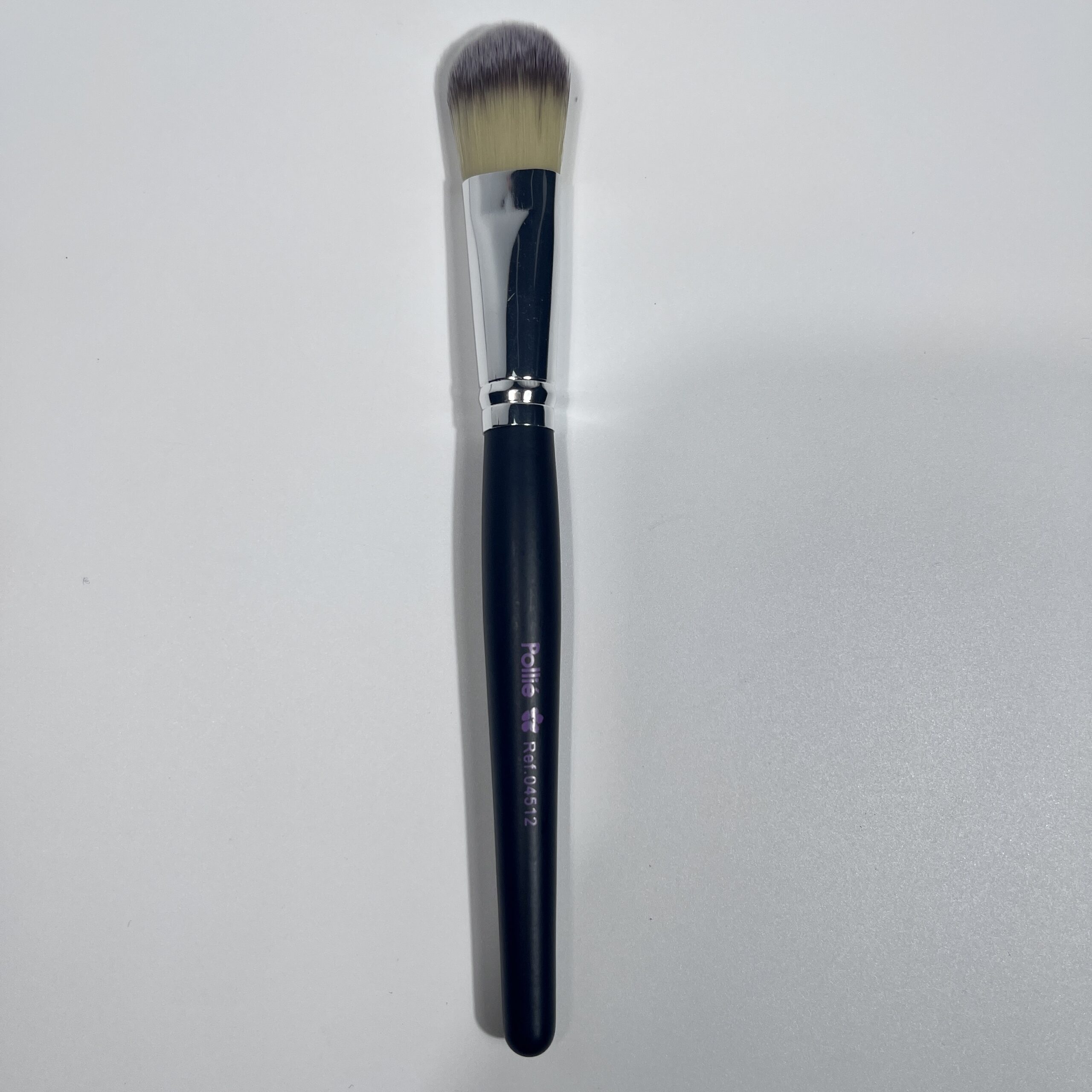
- Dense Fibers (Thick Ferrules): Essential for liquid foundation or buffer brushes, providing the firmness and pressure needed to blend product evenly.
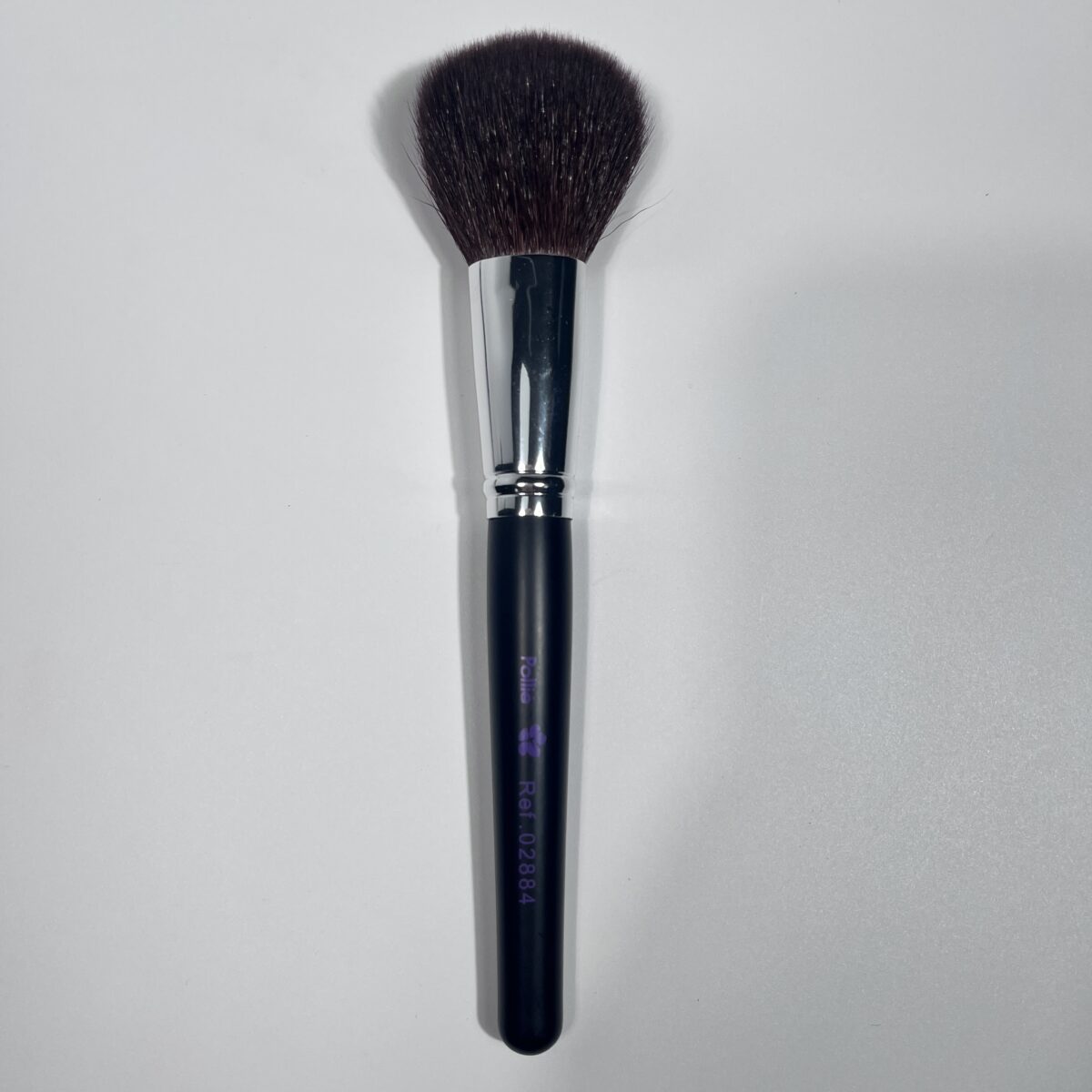
- Loose Fibers (Wider Ferrules): Ideal for powder brushes (blush, powder), allowing the fibers to splay out and diffuse color lightly and seamlessly.
- Preventing Shape Distortion: A poorly constructed ferrule—thin material or weak seams—can bend or deform under the pressure of routine use and cleaning, which permanently alters the brush shape and renders it ineffective for the consumer. High-grade materials and construction prevent this deformation.
3. Structural Integration: Handle-to-Head Strength
The ferrule acts as the bridge, transferring the force from the user’s hand (via the handle) to the application surface (via the fibers).
- Secure Connection: The handle is typically inserted into the ferrule and then crimped and often glued. A common failure point is the handle becoming loose or detaching entirely. This often happens because the wooden handle was not adequately prepared (e.g., proper lacquer coating to prevent moisture swelling) or the internal ferrule crimp was insufficient.
- Material Compatibility: If the handle material (wood, resin, aluminum) and the ferrule material are incompatible, or if the adhesive is wrong, the brush’s integrity is compromised, leading to high returns and negative reviews for your brand.
Part II: Ferrule Materials and Construction (The Supplier’s Secret)
The longevity of a brush is intrinsically linked to the material and manufacturing process of the ferrule itself. B2B buyers must know the trade-offs between the primary materials.
1. Primary Material Choices
| Material | Characteristics | B2B Pros | B2B Cons |
| Aluminum (Al) | Lightweight, highly moldable, soft metal. | Most cost-effective, easy to color (anodization), low shipping weight. | Prone to dents, scratch damage, and deformation during heavy use or shipping. Lower perceived luxury. |
| Brass (CuZn) | Heavier, strong, highly durable, and corrosion-resistant. | Best for premium/luxury lines. Superior strength, excellent feel/weight (premium tactile experience), and resistance to shape deformation. | Highest cost and heaviest material, increasing freight and per-unit price. |
| Copper (Cu) | Similar to brass but softer and prone to tarnishing unless lacquered/plated. | Good weight and premium feel; often used for a specific aesthetic look. | Requires careful finishing (lacquer) to prevent oxidation (green tarnishing); mid-to-high cost. |
| Plastic/Resin | Lightest, very low cost, highly customizable shape. | Ideal for travel sets or promotional items. Full design freedom for non-standard shapes. | Lowest perceived quality, poor mechanical strength, cannot be crimped effectively (relies heavily on adhesive), high failure rate under stress. |
2. The Critical Role of Plating and Finishing
For aluminum, brass, and copper ferrules, the final finish is non-negotiable for longevity and aesthetics.
- Plating: Most metallic ferrules are electroplated or lacquered. Common finishes include nickel-plating, chrome, gold, rose gold, or black chrome.
- What Your Supplier May Skip: Low-cost suppliers may use thin, single-layer plating. This plating wears off rapidly due to friction, oil, and cleaning, exposing the base metal (e.g., aluminum), which is an instant sign of poor quality to the consumer.
- The Professional Standard: We utilize double-plating or a protective e-coating (electro-deposition coating) process. This ensures maximum resistance to abrasion, cleaning solvents, and oxidation, maintaining the high-gloss or matte finish for the brush’s lifetime.
- The Seam: Metal ferrules are typically rolled or drawn from flat stock, creating a longitudinal seam.
- Visible Seams: A visible, sharp, or poorly aligned seam is the most obvious sign of a low-quality supplier. It catches product, irritates the user, and is a potential weak point for failure.
- Seamless Ferrules (Drawn Ferrules): For the highest quality lines, we recommend drawn ferrules, which are seamlessly shaped from a single piece of tubing, eliminating the weak seam and vastly improving strength and aesthetic appeal. This is a significant quality upgrade that low-end suppliers cannot offer.
Part III: Quality Assurance and Risk Mitigation (What to Demand)
To protect your brand investment in OEM/ODM brushes, you must embed rigorous ferrule-focused quality checks into your supplier contract.
1. Mandatory Quality Testing Protocols
A responsible supplier performs—and provides documentation for—these tests:
- Handle Pull-Strength Test: This test measures the force (in Newtons or Kilograms) required to pull the handle out of the ferrule. Industry standards demand a high minimum threshold (e.g., $10 \text{ kg}$ for a large face brush). Any supplier unwilling to perform this test is hiding poor adhesive quality.
- Fiber Pull-Strength (Shedding) Test: After the brush is wet and dried (mimicking cleaning), individual fibers and tufts are tested for resistance to shedding. This verifies the efficacy of the epoxy bond and the crimping process.
- Water/Solvent Immersion Test: The brush head is immersed in water and common cleaning solutions (e.g., Isopropyl Alcohol solution) for a defined period. This stress-tests the adhesive and plating, looking for swelling, loosening, or discoloration. A key test for brushes intended for liquid formulas.
- Scratch and Abrasion Resistance Test (Plating): Utilizing standardized methods (e.g., pencil hardness test), this verifies the durability and adhesion of the plating/lacquer against daily wear and tear.
2. Procurement Negotiation Points
When discussing your order with a potential supplier, focus on these critical ferrule specifications:
- Specify Ferrule Gauge (Thickness): Do not simply accept “aluminum.” Specify the desired metal thickness (e.g., $0.3 \text{ mm}$ or $0.4 \text{ mm}$). Thicker gauge aluminum or brass drastically improves durability.
- Mandate Seamless Construction: For your flagship product line, negotiate the use of seamless (drawn) ferrules over seamed (rolled) ferrules.
- Identify the Adhesive Type: Request confirmation of the epoxy type (e.g., two-part, industrial-grade epoxy with water-resistant certification).
- Demand Visual Inspection Standards: Ensure the supplier has strict AQL (Acceptable Quality Limit) standards for defects like visible seams, plating discoloration, uneven crimping, or adhesive bleed-out.
Conclusion: The Ferrule as a Brand Investment
The ferrule is the anchor of a high-quality makeup brush. Investing in superior ferrule materials, precise manufacturing techniques (like controlled crimping and e-coating), and rigorous quality testing is not an added cost—it is an essential investment in your brand’s longevity and customer satisfaction.
A cheap ferrule leads to a cheap brush, regardless of how soft the hair or how beautiful the handle finish. Conversely, a robust, expertly crafted ferrule ensures years of performance, reducing returns, fostering customer loyalty, and reinforcing your brand’s reputation for uncompromising quality.
We pride ourselves on offering full transparency in our ferrule sourcing and assembly processes, providing the necessary quality control data and strength testing to validate every batch we produce.
Do you have specific technical requirements for a new brush line, such as a desire for a heavy brass ferrule or a seamless aluminum construction? We can provide detailed quotes and material samples.


