
Brand Identity Through Customization: Why Your Brushes Are Your Brand’s Signature
Introduction: The Power of Customization in a Commoditized Market
Walk into any beauty retailer, online or offline, and you’ll be greeted by walls of color cosmetics. Yet, look closer at the tools that apply these products—the humble cosmetic brush—and a paradox emerges. For the end consumer, the brush is often an afterthought, a generic stick bundled with a purchase. For the brand selling that eyeshadow palette or foundation, however, that brush is a silent ambassador, a critical touchpoint, and a potent, yet frequently underleveraged, opportunity for brand differentiation. In the vast, competitive arena of global beauty manufacturing, where private label and OEM (Original Equipment Manufacturing) are the norms, how does a cosmetic brush supplier transition from being a replaceable cog in the supply chain to an indispensable strategic partner? The answer lies in moving beyond volume and venturing into value, through the deliberate and strategic power of customization.
For too long, the export model for brush manufacturers has been predicated on economies of scale: produce vast quantities of standard brushes at low cost. This model creates a commoditized market where competition is fierce, margins are thin, and relationships with clients are transactional. A brand’s identity, in this scenario, is slapped on as a final step—a logo hot-stamped onto a mass-produced handle. This is not brand building; it is brand labeling. True customization represents a fundamental paradigm shift. It is the process of co-creating a tool that is physically and philosophically aligned with a brand’s unique DNA. This article argues that for the forward-thinking cosmetic brush manufacturer, offering deep, holistic customization is the most powerful strategy to forge a distinctive brand identity—not just for your clients, but crucially, for your own manufacturing enterprise. It is the pathway from being a supplier of products to becoming a curator of brand experiences, fostering unshakeable loyalty, and commanding premium value in the global marketplace.
1. Beyond Logos: Customization as a Holistic Brand Story
The journey begins by dismantling a common misconception: customization is not synonymous with private labeling. Putting a client’s logo on a standard SKU is the first, most basic step. True, identity-forging customization is a holistic narrative woven into every fiber and contour of the brush. It is a multi-sensory brand story told through form, function, and feel.
Consider the elements that can be tailored:
- Form & Function: This is the heart of meaningful customization. It’s designing a uniquely angled cheek brush to perfectly suit the contour of a brand’s signature sculpting powder. It’s engineering a micro-precision eyeliner brush with a specific taper to work with their innovative gel formula that dries in three seconds. A standard brush applies a generic product; a custom brush is engineered to unlock the optimal performanceof a specific product. When the tool and the formula are designed in concert, the result is a superior consumer experience that becomes synonymous with the brand’s reputation for efficacy and innovation.
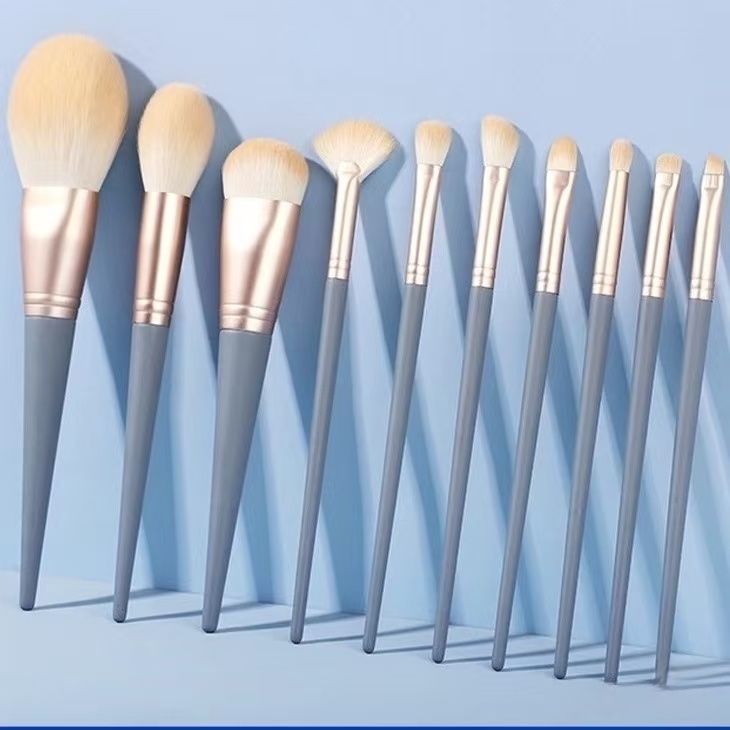
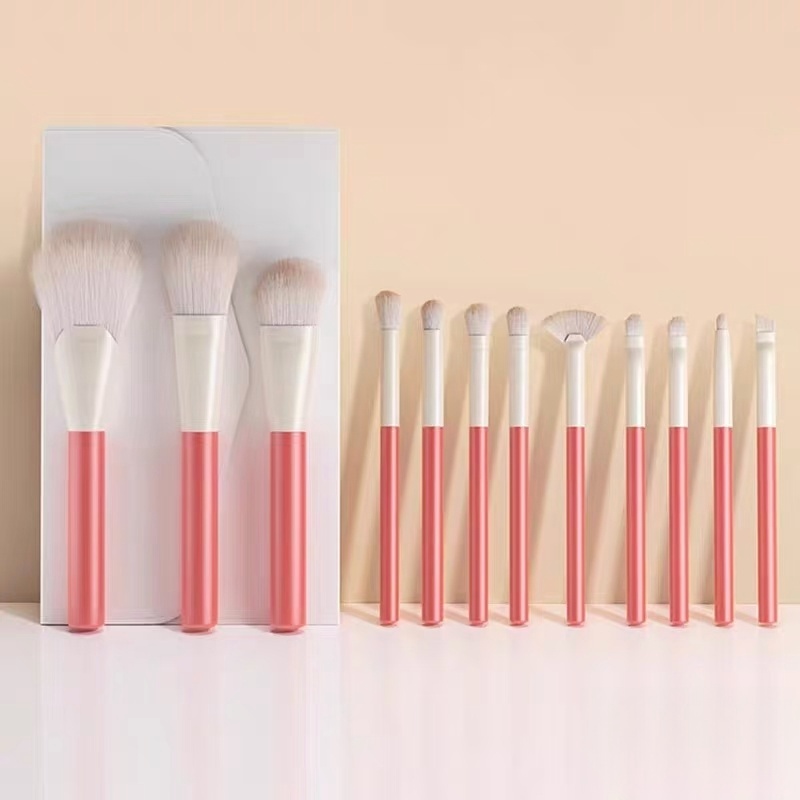
- Material as Message: The choice of bristles speaks volumes. A brand championing vegan and cruelty-free values doesn’t just want synthetic fibers; it needs a proprietary synthetic blend that mimics the softness and pick-up of high-end natural hair, proving that ethics don’t compromise performance. Another brand targeting the ultra-luxury segment may require a specific, sustainably sourced sable hair, tracked and certified. The handle is equally expressive. Is it sleek, weighted aluminum conveying clinical precision? Is it pastel-colored, sustainably harvested birch wood radiating eco-friendly charm? Is it an ergonomically curved resin designed for the grip of a professional makeup artist? Each material choice is a chapter in the brand’s story.
- Packaging as the First Touch: The unboxing experience is marketing. Customization extends to the brush guard, the pouch, the presentation box. A magnetic closure, a velvet lining, a recyclable seed-paper insert—these are not mere containers; they are designed touchpoints that extend the brand’s aesthetic and values, transforming a utility tool into a coveted object.
In this holistic view, every customized element ceases to be a component and becomes a brand asset. The brush is no longer just a brush; it is a tactile manifestation of the brand’s identity, values, and promise to its consumer.
2. The Collaborative Process: From OEM to Strategic Partnership
The shift to this level of customization necessitates a transformation in the manufacturer-client relationship. It moves the interaction from the transactional sphere of OEM (“Here are the specs, produce 50,000 units”) to the collaborative, trust-based realm of a strategic partnership, often blending ODM (Original Design Manufacturing) and strategic OEM support.
This collaborative journey typically unfolds in distinct, intimate phases:
- Phase 1: The Discovery Dialogue. This initial consultation moves beyond purchase orders. It is a deep-dive into the whybehind the brand. What is the demographic? What is the brand’s “hero” product that this brush will accompany? What are the core brand values (luxury, sustainability, artistry, inclusivity)? What pain points does the brand seek to solve for the end-user? This phase is about listening and understanding strategic goals.
- Phase 2: Co-Creation and Conceptualization. Here, the manufacturer translates brand ethos into tangible concepts. Design teams present initial sketches, material swatches, and technical proposals. “Given your focus on a ‘glass skin’ finish, we propose a unique, densely packed but ultra-soft fiber blend for a seamless, streak-free foundation application.” This phase positions the manufacturer as a creative problem-solver, not just a fabricator.
- Phase 3: The Prototyping Iteration. This is where ideas become reality. Physical prototypes are created, tested, and refined. The brand provides feedback on weight, balance, bristle softness, and application effect. Several iterations may occur. This phase requires transparent communication, technical expertise from the manufacturer, and patience from both parties. It is in this iterative crucible that trust is forged.
- Phase 4: Production as Perfection. Once the prototype is approved, the manufacturer’s expertise in precision engineering, quality control, and ethical production comes to the fore. The partnership now focuses on ensuring that the ten-thousandth brush is identical to the perfect first prototype, maintaining the integrity of the co-created design.
Through this process, the manufacturer becomes embedded in the client’s brand identity. You are not a vendor they buy from; you are the partner who understandsthem and possesses the specialized capability to materialize their vision. This creates a profound, sticky loyalty that is immune to the siren call of a competitor offering a fraction of a cent per unit cheaper on a generic item.
3. Solving Problems, Creating Value: The Functional Edge of Custom Brushes
While aesthetics and branding are crucial, the most powerful customizations are those rooted in solving a functional problem or creating a unique user benefit. This is where the manufacturer’s technical expertise becomes the hero, providing the “functional edge” that marketing stories are built upon.
Let’s explore concrete examples:
- Formula-Specific Design: A brand develops a highly-pigmented, mousse-textured blush. A standard flat-top brush would apply it unevenly. The custom solution: a brush with a slightly domed, less-dense head made of a specific synthetic fiber that sheers out the product perfectly for a buildable, airbrushed finish. The brush is now an essential key to using the product correctly.
- Ergonomic Innovation for Professionals: A brand targeting professional makeup artists learns that artists often suffer from hand fatigue. The custom solution: a handle designed with a proprietary, asymmetrical contour that fits naturally in the hand, with a textured grip zone. This directly enhances the professional’s workflow and well-being, making the brand their preferred partner.
- Enabling New Application Techniques: A brand wants to launch a “skin care-makeup hybrid” serum foundation applied with a cooling, massaging effect. The custom solution: a brush with a unique, flexible polymer core in the bristles and a handle that can be chilled. This creates an entirely new sensorial experience and application method, worthy of a tutorial video campaign.
These functional customizations deliver undeniable value. They reduce product returns (because the tool works), enhance customer satisfaction, and generate authentic, positive reviews. They provide a tangible, defensible reason for the brand to justify a higher price point. For the manufacturer, showcasing such case studies establishes your firm not as a factory, but as an innovation lab and a problem-solving hub for the beauty industry.
4. Building Your Manufacturer’s Brand Through Theirs
A profound, often overlooked benefit of deep customization is its reflexive power. By successfully enabling other brands to build their unique identities, you simultaneously and powerfully build your own brand as a manufacturer.
Consider the ripple effect: When a beauty influencer raves about the “perfect, bouncy, cloud-like application” of a new foundation brush from a trendy indie brand, they are indirectly praising the manufacturing expertise that created that specific brush head. When a luxury brand’s press release highlights its “custom-designed, sustainably-weighted handle for effortless artistry,” it is a testament to your engineering and design partnership. Each successful custom brush in the market is a silent, three-dimensional billboard for your capabilities.
This positions your company with a distinct identity in the B2B space:
- The Expert: You are sought after for technical knowledge on fibers, ergonomics, and production techniques.
- The Innovator: Brands with disruptive ideas come to you because you can execute the “impossible.”
- The Reliable Partner: You are known for clear communication, intellectual property protection, and on-time delivery of complex projects.
This cultivated reputation attracts a better caliber of client—brands that value quality, innovation, and partnership over the lowest possible cost. It creates a virtuous cycle: successful projects lead to testimonials and case studies, which attract more ambitious clients, which lead to more groundbreaking work, further solidifying your market position as a leader in custom solutions. Your brand becomes synonymous with “possibility.”
5. Navigating the Challenges: Quality, MOQs, and Communication
Embracing a customization-centric model is not without its challenges. Acknowledging and strategically managing these is key to credible and profitable operations.
- Maintaining Uncompromising Quality: Custom designs, especially with new materials or shapes, can present unforeseen production challenges. Rigorous in-house testing protocols (for durability, colorfastness, shedding) are non-negotiable. Investing in skilled quality control technicians and advanced testing equipment ensures that innovation never comes at the expense of the flawless finish your clients’ brands demand.
- Managing Minimum Order Quantities (MOQs): This is a classic tension. Custom tooling, specialized materials, and production line setup have costs. The key is flexible, transparent structuring. Offer tiered MOQs: a higher MOQ for a fully bespoke design from scratch, and a lower MOQ for “customization-lite” options (e.g., choosing from a curated library of handle shapes and colors with a custom logo). This opens the door to promising start-ups while still servicing larger, established brands.
- Ensuring Clear Cross-Border Communication: In global trade, misunderstandings are costly. Overcoming language barriers and cultural differences in design perception is critical. Implement a visual-driven process: detailed CAD drawings, 3D renderings, and high-definition prototype videos. Use annotated diagrams and standardized specification sheets. Assign a dedicated project manager who acts as a single point of contact, fluent in both the client’s vision and the factory’s technical language. This professional project management turns potential friction into a showcase of your reliability.
Conclusion: The Future is Personalized
The global beauty industry is accelerating towards hyper-personalization. Consumers no longer seek just products; they seek experiences, alignment with values, and tools that feel uniquely suited to them. This macro-trend cascades down the supply chain. Brands that wish to survive and thrive must offer that distinctive, cohesive experience, and the tools they provide are an integral part of that offering.
For the cosmetic brush manufacturer, the implication is clear. The future belongs not to the largest generic producer, but to the most adaptable, creative, and collaborative partner. Customization is the master key. It is the process that allows you to help clients transform a generic accessory into their brand’s signature. It is the service that builds deep, strategic partnerships immune to the whims of price shopping. It is the practice that, ultimately, forges your own factory’s identity as an innovator and a leader.
By embracing customization today—not as an add-on service, but as the core of your value proposition—you are doing more than selling brushes. You are investing in the long-term architecture of brand identities, securing your own place as an essential, visionary partner in the beautiful, ever-evolving story of global beauty. The future is not one-size-fits-all. The future is personal, distinctive, and custom-made.


